
I Am the True Vine: What Jesus Was Really Claiming
January 9, 2026
The Attention Economy and an Ancient Invitation
Our attention has never been more valuable. Companies spend enormous sums just to get us to stop scrolling for a moment. The smartphone in your pocket can show you a chart of exactly how your attention was divided over the past year, how many hours went to news, social media, entertainment, or work. If you could see that chart for all 52 weeks of your life, what would it show captured your attention the most?
Into that world of constant noise and distraction, Jesus calls us to something different: to pay attention, to remain, to abide with him. “I am the vine; you are the branches. If you remain in me and I in you, you will bear much fruit; apart from me you can do nothing” (John 15:5). That is the invitation and it carries more weight than it might first appear.
Why a Grape Vine?
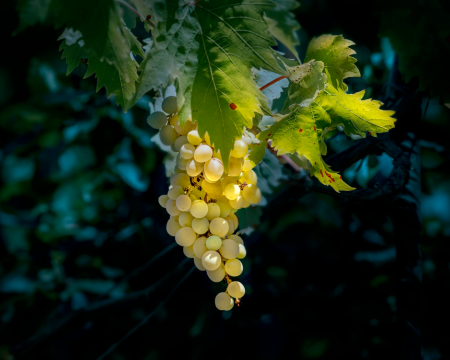
For modern readers, Jesus’ vineyard metaphor sounds like a pleasant agricultural image. But for Jesus’ disciples, it was anything but casual. The grape vine was one of the central symbols of Israel’s identity as the people of God.
The Jewish temple, the one building on earth where heaven met the physical world, the singular point of God’s presence, had a massive golden vine above its entrance. The ancient historian Josephus describes grape clusters hanging from it as tall as a man. Every Jew who walked through those doors passed under that vine. It wasn’t decoration. It was identity.
The vine ran all the way through the Old Testament. Psalm 80 speaks of God transplanting a vine from Egypt and planting it in the promised land which was a direct metaphor for Israel. In Isaiah 5, the prophet says it plainly: “The vineyard of the Lord Almighty is the nation of Israel.” God looked to that vine for a harvest of justice and righteousness. Instead, he found bloodshed and cries of distress.
The prophet Ezekiel asks a sharp question about a vine that bears no fruit: what good is it? A dead vine can’t even be used for timber. It’s only useful for the burn pile.
“I Am the True Vine”—What That Meant
When Jesus said those words in John 15, the disciples would have heard something radical. He wasn’t just reaching for a farming metaphor. He was claiming to be Israel. He was claiming to be the temple. He was saying: I am here to do what Israel failed to do.
God’s purpose for Israel was never merely about the Israelites being good people. The fruit God wanted was justice, holiness, and the restoration of the world from brokenness and evil. Israel failed at that task. Jesus stepped into Israel’s place and accomplished what they could not. He conquered sin and death, and now through him and through the Holy Spirit living in every believer, God’s presence moves in the world—not confined to a single building in Jerusalem, but in every follower of Jesus everywhere.
The warning Jesus gives is equally serious. Just as a fruitless vine is useless and gets thrown on the burn pile, a fruitless church is a tragedy—not primarily a threat of future hell, but the present danger of becoming meaningless and irrelevant. A church that is no longer bearing fruit in God’s kingdom is like salt that has lost its saltiness. It’s not worth much except to be thrown out on the dirt path.
The apostle Paul describes exactly this kind of Christian life in 1 Corinthians 3, people who said yes to Jesus but never grew, never produced fruit, living like a Christian version of the rest of the world. Paul says it is possible to be saved and yet waste your life in fruitlessness, entering heaven as one barely escaping through the flames. That should shake us.
What Abiding Actually Looks Like
So what does it mean to remain in Jesus? The answer is both personal and communal.
Individually, it is impossible to abide with Jesus without spending time with him, reading his words in the Bible and listening to his voice in prayer. There’s no shortcut here. A branch that isn’t connected to the vine doesn’t get to produce fruit by some other means.
As a church family, abiding with Jesus also means remaining in the body of Christ. Being formed into the image of Jesus is not a solo project. The Bible is clear that it’s a group activity.
One practical way to build a daily 1-1 with Jesus is to follow four simple steps: Read, Pray, Listen, Do. Read God’s Word and ask what he wants to say to you. Speak to God in prayer. Sit in silence and invite him to speak to your spirit. Then write down what he’s calling you to do, and do it.
Notice that last part: Do. Jesus says immediately after “remain in me” that we should obey his commands. Paul puts it this way in Ephesians 2: yes, we are saved by grace through faith, not by works (verse 8). But verse 10 tells us the purpose of that salvation: “For we are God’s handiwork, created in Christ Jesus to do good works, which God prepared in advance for us to do.”
Abiding with Jesus doesn’t produce a quiet, comfortable Christian life that keeps us safely on the sidelines. It produces fruit. Real fruit, the kind of justice, restoration, and kingdom life that God always intended his people to carry into the world.
Jesus says: remain in me, and what you bring from your life into eternity will be so great it will have to be carried on a pole between two people like those enormous clusters of grapes from the land of Canaan. That is the life Jesus is inviting us into.
More Reading
John 15:1-8
Psalm 80:8-19
Isaiah 5:1-7
Ephesians 2:8-10
1 Corinthians 3:11-15